वीर सावरकर: वह लेखक, जिसकी किताब बेच बंदूकें खरीदते थे आज़ादी के परवाने

न ही भाजपा-संघ वाले स्वतंत्रता सेनानी वीर सावरकर के बारे में बात करते थकते हैं और न ही कॉन्ग्रेस वाले हिन्दू महासभा के नेता रहे विनायक दामोदर सावरकर में नुक्स निकालते। इन दोनों राजनीतिक ध्रुवों के बीच जो खो जाता है, वह है लेखक, इतिहासकार, विचारक सावरकर- जिसने शायद एक व्यक्ति या नेता से आगे जाकर भारत में ब्रिटिश शासन की जड़ें खोद दीं। 

जिसने दशकों बाद पहली बार भारत-भूमि को याद दिलाया कि 1857 में महज कुछ दिशाहीन, अनुशासन-विहीन सैनिकों की हिंसा नहीं, स्वतंत्रता का पहला संग्राम हुआ था। जिसके ‘मास्टर-प्लान’ पर काम करते हुए बारीन्द्र घोष, शचीन्द्रनाथ सान्याल, रासबिहारी बोस आदि ने अपनी उम्र झुलसा दी और बिस्मिल, बाघा जतीन, राजेन्द्र लाहिड़ी आदि अनगिनत वीरों ने प्राणोत्सर्ग किया।

 जिसकी प्रेरणा से अध्यक्ष चुने जाने के बावजूद कॉन्ग्रेस में हाशिये पर धकेल दिए गए सुभाष चन्द्र बोस आज़ाद हिन्द फ़ौज के ‘नेताजी’ बनने नजरबंदी से भाग निकले। 

जिसकी किताबें इतनी लोकप्रिय थीं कि भगत सिंह उसकी प्रतियाँ बेचकर बंदूकें खरीदने का पैसा जुटा सकते थे!

‘1857 दोहरा कर ही मिलेगी आज़ादी’

1857 के विद्रोह को दबाने में अंग्रेजों ने जो क्रूरता और निर्ममता दिखाई थी, वह अनायास या अकारण ही नहीं थी। पूरी ब्रिटिश शासन व्यवस्था ब्रिटिश सेना के संरक्षण पर टिकी थी और ब्रिटिश सेना (चाहे वह ईस्ट इंडिया कम्पनी की हो या बाद में ब्रिटिश क्राउन की) में केवल मुट्ठी-भर अंग्रेज अफ़सर होते थे- भारतीयों को विदेशियों का गुलाम बना कर रखने वाली असली ताकत भारतीय सैनिक ही थे; उन राजाओं की सेनाओं के, जिनकी कम्पनी बहादुर या ब्रिटेन के राजपरिवार के साथ संधि हुई थी, या सीधे ब्रिटेन की गुलामी में पड़े हुए भू-भाग की ब्रिटिश इंडियन आर्मी के सैनिक। 

अतः 1857 को क्रूरता से कुचलना अंग्रेजों के लिए ज़रूरी था, ताकि आने वाली पीढ़ियों तक किसी सैनिक के दिमाग में अपने गोरे मालिकों पर बंदूक तानने की जुर्रत न आए। इसीलिए उन्होंने न केवल लोमहर्षक निर्ममता के साथ इस संग्राम को कुचला (किवदंतियाँ हैं कि मंगल पाण्डे के घर वालों की पहचान करने में नाकाम रहने पर उन्होंने कानपुर से बैरकपुर तक के हर गाँव के हर पाण्डे उपनाम वाले बच्चे-बूढ़े-औरत को गाँवों के पेड़ों से फाँसी पर लटका दिया था), बल्कि इतिहास में इसे अधिक महत्व न देते हुए महज़ एक अनुशासनहीन विद्रोह के रूप में दिखाया। 

वह सावरकर ही थे जिन्होंने पहले मराठी और फिर अंग्रेजी में प्रकाशित ‘1857 का स्वातंत्र्य समर’/The Indian War of Independence के ज़रिए इस लड़ाई के असली रूप को जनचेतना में पुनर्जीवित किया।

1909 में प्रकाशित इस किताब में उन्होंने न केवल इस विद्रोह की राजनीतिक चेतना को रेखांकित किया बल्कि इसके राष्ट्रीय स्वरूप के पक्ष में भी तर्क रखे। यही नहीं, उन्होंने यह भी अनुमानित कर लिया था कि अगर भारत को ब्रिटिश शासन के चंगुल से मुक्त होना है तो अंततः यही रास्ता फिर से पकड़ना होगा। ब्रिटिश सेना को पुनः राष्ट्रवादी, देशभक्त सैनिकों से भरना होगा जो वर्षों तक चुपचाप सेना में अपनी पैठ बनाएँ, प्रभुत्व स्थापित करें, अन्य सैनिकों की निष्ठा विदेशी शासन से इस देश की जनता की ओर मोड़ें। अंत में जब संख्याबल आदि सभी प्रकार से मजबूत हो जाएँ तो अपने नेता के इशारे पर, सही समय पर विद्रोह कर दें। महत्वपूर्ण रणनीतिक संसाधनों, हथियारों, रसद, आपूर्ति मार्गों आदि पर कब्ज़ा कर अंग्रेजों की व्यवस्था को घुटने पर ले आएँ।

सारे जहाँ में प्रतिबंधित

बौखलाए अंग्रेजों ने किताब और सावरकर पर शिकंजा कसना शुरू कर दिया। लंदन के सभी प्रकाशकों को इस किताब के अंग्रेजी अनुवाद/संस्करण के प्रकाशन के खिलाफ़ आगाह कर दिया गया। फ़्रांस ने भी अंग्रेज़ी दबाव में घुटने टेक दिए। अंततः किताब का अंग्रेज़ी संस्करण हॉलैंड (अब नीदरलैंड) में प्रकाशित हुआ- वह भी इसलिए कि ‘काली’ और ‘भूरी’ दुनिया को गुलाम बनाने में इंग्लैण्ड और हॉलैंड में ऐतिहासिक दौड़ मची थी। दोनों एक-दूसरे के औपनिवेशिक शासन को कमजोर करना चाहते थे। इस किताब को भारत में बाँटे जाने के लिए ब्रिटिश साहित्य के पन्नों में छिपा कर, या उसकी जिल्द चढ़ाकर लाया जाता था।

पीटर होपकिर्क अपनी किताब On Secret Service East of Constantinople में लिखते हैं कि इसके बाद अंग्रेजों ने सावरकर की किताब को ब्रिटिश लाइब्रेरी की सूची तक में जगह नहीं दी, ताकि भारतीय छात्रों को इसके बारे में पता न चल जाए। इसी किताब में वह यह भी बताते हैं कि सावरकर की किताब को ‘तस्करी’ कर भारत में लाने के लिए चार्ल्स डिकेंस का मशहूर उपन्यास ‘पिकविक पेपर्स’ काफ़ी इस्तेमाल हुआ है।

भगत सिंह

भगत सिंह ने न केवल सावरकर के साहित्य का खुद गहन अध्ययन किया (उनकी जेल डायरियों और लेखन में सावरकर से अधिक उद्धृत केवल एक लेखक हैं), बल्कि कई इतिहासकारों की राय है कि वे अपने क्रांतिकारी संगठन में भी सावरकर के अध्ययन को प्रोत्साहित करते थे। यही नहीं, सावरकर की ‘1857 का स्वातंत्र्य समर’ और इसके अंग्रेजी संस्करण की आमजन के बीच भारी माँग और प्रतिबंध के चलते आपूर्ति में किल्लत को देखते हुए भगत सिंह के इसकी व्यवसायिक पैमाने पर तस्करी करने के भी उद्धरण इतिहास में मिलते हैं। इस किताब को ऊँचे दामों पर बेचकर उनका संगठन अंग्रेजों के खिलाफ़ क्रांति के लिए हथियार खरीदने का धन उगाहता था। इस किताब का दूसरा संस्करण प्रकाशित करवाने में भगत सिंह की भूमिका का ज़िक्र विक्रम सम्पत द्वारा लिखित सावरकर की जीवनी में है। यही नहीं, भगत सिंह ने सावरकर की केवल इस किताब ही नहीं, ‘हिन्दू पदपादशाही’ का भी ज़िक्र अपने लेखन में किया है।

सावरकर भी भगत सिंह का काफी सम्मान करते थे। इसकी एक बानगी यह है कि सावरकर की मृत्यु के उपरांत 1970 में प्रकाशित उनकी जीवनी ‘आत्माहुति’ का विमोचन भगत सिंह की माता माताजी विद्यावती देवी के हाथों हुआ। इस समारोह में उनके छोटे भाई भी शरीक हुए थे।
आज यह कतई ज़रूरी नहीं है कि जो कुछ सावरकर ने लिखा है, वह सही ही हो। बहुत कुछ ऐसा भी हो सकता है जो उस समय भले सही रहा हो, लेकिन आज प्रासंगिक न हो। सावरकर के जीवनकाल में ही ‘हिंदुत्व’ और हिंदूवादी राजनीति की उनसे अलग परिभाषाएँ रहीं हैं। ऐसा माना जाता है कि डॉ. श्यामाप्रसाद मुखर्जी के हिन्दू महासभा छोड़ने के पीछे एक महती कारण पाकिस्तान को लेकर उनमें और सावरकर में पाकिस्तान के अस्तित्व को स्वीकार कर लेने (डॉ. मुखर्जी का मत) बनाम पुनः एक दिन अखण्ड हिंदुस्तान की सावरकर की परिकल्पना का गंभीर मतभेद था। ‘हिंदुत्व’ शब्द सावरकर के पहले भी था और सरसंघचालक मोहन भागवत ने यह कई बार साफ़ किया है कि आज का राष्ट्रीय स्वयंसेवक संघ गोलवलकर-सावरकर से आगे बढ़ चुका है। ऐसे में यदि सावरकर को यदि जीवित रखना है तो उनके प्रशंसकों, उनके अनुयायियों को उन्हें दोबारा पढ़ना होगा, उन्हें दोबारा ‘खोजना’ होगा।

Future of Remote Work

Communication Technology and Inclusion Will Shape the Future of Remote Work

In the past, remote employees have had a bad reputation. Many employers believed their workforce would be too easily distracted at home, where their managers couldn't keep an eye on their direct reports.

Remote work was very rare a decade ago. Working from home was usually only available as a special arrangement to accommodate families in specific cases. However, teleconferencing and telework technology have advanced to the point where some businesses thrive with completely remote teams. In fact, it's not uncommon for businesses to allow their employees to work from home once or twice a week.

Remote work can also help prevent the spread of illness, helping companies avoid lost productivity and protecting public health. For example, the outbreak of COVID-19 prompted many employers to shift to a remote work model for all employees possible in a bid to limit the spread of the coronavirus.

To determine the effectiveness of communication technology and working remotely, we'll examine the history of working remotely, the current state of the workforce, and predictions for the future of remote employment.

Is remote working effective?

A decade ago, most employers would have balked at the idea of employees regularly working from home. One major concern most employers had for working remotely was a loss of productivity. How productive and efficient can an employee be when they're not under constant supervision by co-workers and supervisors? 

To better understand the effectiveness of remote work, Airtasker surveyed 1,004 full-time employees – 505 of whom were remote employees – throughout the U.S. about their work habits and productivity. The results indicate that remote workers are actually more productive than their office-based counterparts. The study found the following: 

·         Remote employees work an additional 1.4 more days per month than in-office employees, which is nearly 17 additional workdays a year.

·         Remote employees take longer breaks on average than office employees (22 minutes versus 18 minutes, respectively), but they work an additional 10 minutes a day.

·         Office workers are unproductive for an average 37 minutes a day, not including lunch or breaks, whereas remote employees are unproductive for only 27 minutes.

·         15% of remote workers said their boss distracted them from work, which is less than the 22% of office-based employees who said the same thing. 

While these statistics may encourage both employees and employers to implement a work-from-home program, remote employees also reported higher levels of stress and more difficulty finding work-life balance than office-based workers. However, according to the American Psychological Association, remote work can increase employee satisfaction when implemented correctly. 

Ultimately, working remotely is effective, but it has to be put into practice correctly, and it may not be the best situation for every employee or every business. 

How remote work has evolved

There was a time when remote work as we know it wasn't even a possibility, because the technology didn’t exist. If your colleagues and business partners wanted to get in touch with you when you were out of the office, they couldn't email, text or direct-message you. You would've needed to provide an alternative phone number, a pager or even a fax number to have a work-related conversation. Even full-time "remote" positions were different from what they are today.

"Ten years ago, remote employment basically meant a telemarketing or customer service position at below minimum wage," said Samantha Lambert, director of human resources at website design company Blue Fountain Media. "It rarely was connected with a full-time career. Now, technology affords us the ability to get the same job done, no matter where in the world we are. It has enabled us to be in contact with co-workers or clients at any time."

One of the most helpful technologies for seamless remote work is video conferencing. Live video feeds help out-of-office workers see and speak to one another in real time, anywhere with an internet connection, which is the next best thing to a face-to-face meeting. But this capability wouldn't be possible without the widespread broadband internet adoption of the past 10 to 15 years.

This technology has advanced so quickly that many companies have even done away with traditional offices and instead run their businesses out of coworking spaces to accommodate their largely remote workforce.

"Shared office spaces, where remote employees can gather to work, have been created and are more widely available in different cities," Lambert said. "This in itself represents the growing amount of remote workers in recent years."

Remote work also presents unique opportunities in the face of crisis, such as a natural disaster or an epidemic. For instance, as COVID-19, commonly known as the coronavirus, rapidly spreads worldwide, the ability for many workers to perform their job duties entirely from home can help protect both the public health and the continued success of the business.

The current state of remote work

Because of these advances in communication technology and internet access, teleworking has become an accepted practice in many offices, both in the U.S. and globally. This type of work isn't done entirely from home: Remote workers turn to coffee shops or co-working spaces, and some even travel the world while maintaining their career goals.

"The modern workforce is increasingly mobile, collaborative [and] dynamic, and comprises multi-generations, all with differing communication preferences," said Stacey Epstein, CEO of Zinc. "These workers span multiple industries … all who represent unique challenges when it comes to staying connected while on the job."

However, many companies have resisted this work trend for various reasons. Some business owners may fear a lack of productivity in their employees, while others haven't invested in teleconferencing and telework tech to support remote workers. Still, many other businesses have dipped their toes in the remote workforce by creating a work-from-home policy for one or two days a week, or as an exception for a few employees.

According to a survey by Buffer on remote work, 75% of remote workers said their companies don't cover internet costs, and 71% said their employers don't pay for co-working spaces for their employees. These stats are marginally better than the previous year, in which 78% of companies didn't cover internet costs and 76% didn't pay for co-working spaces. While the desire and expectation of working remotely increases significantly every year among the workforce, companies are only slowly adopting remote-friendly policies.

On the other hand, adopting a remote working policy can save companies money by removing the need for expensive office space (or satellite offices) while allowing workers the freedom to create their own schedules and work from wherever they please. It can be a win-win situation.

What the future holds

Fast Company predicts that remote work software, like mobile work tools and virtual reality conferencing, will become the preferred form of communication – even over face-to-face meetings. AI will also likely play a major role in managing remote staff.

These advancements might put companies more at ease. The transition to managing a remote workforce might be daunting, but with the right tech and hardworking employees, it can be a seamless process.

In the long run, fighting the change may do more harm than good. Many employees now expect remote work opportunities. According to Buffer, 99% of current remote workers would like to work remotely, at least some of the time, for the rest of their careers. That's nine points higher than the figure from the same survey in the previous year.

Furthermore, according to Global Workplace Analytics, 37% of remote employees would take a 10% pay cut to continue working from home. Because of this increasingly popular trend, some refuse to accept an onsite position, knowing they can find a more convenient and flexible gig elsewhere.

Instead of resisting the change, organizations should improve their remote work policies and capabilities. If your company is concerned about productivity and performance issues due to a companywide ability to work from home, Lambert recommends creating standard key performance indicators (KPIs) for both management and employees. This way, she said, remote team members are aware of expectations, and their performance can be monitored.


Economic Package Of 20 Lakh Crores: Lockdown 4.0

Prime Minister Narendra Modi announced a Rs 20 lakh crore economic package for what he called "Mission Self-Reliant India" to tide over the coronavirus crisis. "This package is for migrants and farmers who work for the nation day and night, no matter the circumstances," the Prime Minister said, addressing the nation. The special economic package would be the main component of "Atma-Nirbhar Bharat (self-reliant India)", he said.


Following are the highlights of PM Modi's address:

It has been over 4 months that the world is battling coronavirus. 42 lakh have been infected globally. Over 2.45 lakh have died. In India, many have lost their loved ones. I offer my condolences.

One virus has led to global upheaval. Globally, crores of lives at stake.

Entire world in a way, fighting a battle, working to save lives. This is an unprecedented crisis.

Getting exhausted or accepting defeat not an option.

We need to save lives and move forward at the same time.

We have to remain careful and follow rules to live and move ahead. Now that the world is in a crisis, we have to be more resolute. Our resolve will be greater than the crisis.

We need to strengthen our resolve. Since last century, we've been hearing that 21st century belongs to India. The global scenario, we are tracking developments. When we see it from India's prism, it looks like that it is not just a dream, we are responsible to ensure that 21st century belongs to India.

Self-reliance is imperative. Self-reliant India is the only way out.

We stand at a crucial juncture. This crisis has a message for India, an opportunity. I'd try explaining using an example. When the crisis started, not a single PPE kit was made in India, N-95s were produced in negligible numbers. Today, in India, 2 lakh PPEs and 2 lakh N-95s being produced.

India, as this example demonstrates, turned crisis into an opportunity.

The meaning of self-reliance has changed, the global definition is changing. India's heritage, culture talk about self-reliance, the essence being 'the world is one'.

India's self-reliance takes into account global peace and coordination. Our heritage, our motherland, when we become self-reliant, it increases the prospects of safe and prosperous world.

When India became open defecation free, the world changed. Be it tuberculosis, malnutrition or polio, India's action impacted the world. International Solar Alliance is India's gift to the world in the fight against global warming. India's medicines serving as ray of hope in today's times.

The world has started to believe that we can fare very well, that we can contribute in upliftment of humanity. We have had a glorious past. We were dubbed 'sone-ki-chidiya'. Times changed, we yearned for development. We are taking steps towards development today.

Today, we have the resources, the will, we have fine talent. We will manufacture best products, improve quality and modernise the supply chain, we can do this and we will.

During Kutch earthquake, there was rubble wherever you looked. Nobody could contemplate back then that things would improve, but Kutch regained and revived. If we pledge, no target is impossible, no route is tough; and today, we have the will.

India can become self-reliant. This would be based on 5 pillars:

1) Economy: An economy that takes quantum jumps and not incremental gains.
2) Infrastructure: Infrastructure is synonymous with a modern India.
3) Our system: A system that helps us realise dreams, which is based on tech-driven facilities.
4) Demography: Vibrant demography our strength.
5) Demand: The demand and supply chain, we need to utilise the potential. We need to increase demand in the nation. Each stakeholder must be active.

Announcing a special economic package in a bid to make India self-reliant. An important link. Around Rs 20 lakh crores. Around Rs 20 lakh crores which is around 10% of GDP. Package addresses sectors on which crores depend for livelihood.

Package for farmers, for workers, who irrespective of circumstances, work for the nation. Package for MSMEs, who pay taxes sincerely and contribute. Package for Indian industry. From tomorrow, Finance Minister Nirmala Sitharaman will inform in detail.

This signifies bold reforms, we must move forward. In the last six years, the reforms undertaken, today, in crisis, we are much better off.

Who could imagine earlier that money sent by government reaches farmers in full? This imagined when there was no transport, offices were shut.

The reform is in a bid to ensure that such a crisis impacts agriculture in the least possible manner. In a bid to enhance Human Resources and bid to strengthen financial system. These reforms will attract investment and help Make In India.

We need to compete for a place in the global supply chain. We must play a big role in global supply chain. Keeping this in mind, various provisions have been made, which will lead to increased efficiency across sectors.

Hawkers, workers, helps - they have faced difficulties in this time and have made sacrifices. Our duty now to make them better off, to work to further their interests. Keeping this in mind, be it poor, be it workers, be it fishermen, be it from formal or informal sector, certain key announcements will be made.

Local manufacturing, local supply chain: We realize the importance now. Local met our demands, local saved us. Brands that are global were once similarly local. When people used them and these were branded, they became global from local. It's time to be vocal for local.

We need to buy local products and spread the word. I am sure that we can do this. Your efforts have only increased my faith in you. I am proud to recollect that I had asked citizens to buy khadi and to support handloom workers; and in a short time, demand and sales touched record levels. You made it a big brand too. We got the results; and good results.

Scientists and experts say that coronavirus will stay with us for long, but we can't make our lives revolve around this. We will wear masks, maintain distance, but not lose sight of our targets.

In Lockdown 4.0, we will follow norms, fight COVID-19 and move ahead. It will be based on suggestions by the state. Details will be informed by May 18 after suggestions from state. We will fight and move forward by following rules. Our responsibility to make India a self-reliant India will be powered by the energy of the 1.3 billion population. With new energy and new determination, we need to move ahead. Who can stop us then? We can make India self-reliant; and we will. With faith and hope, I urge citizens to take care of their health and the ones around them.


"Love your job, but never fall in love with your company"

I want to take today’s discussion into a current working context with the Narayana Murthy’s quote “Love your job, but never fall in love with your company because you never know when the company stops loving you”. 

The quote talks about different elements of your professional life, goals and value to a company. The big question revolves around commitment to a company or a value which promises to be an interesting context. 

It seems like a strange word in today’s context. There are so many opportunities and challenges out there.

  • The idea of 1 job for your entire life seems to have gone extinct. It appears like a context of the past and doesn’t seem to hold relevance anymore.
  • On that note, what does this job commitment mean? Does it mean that you are willing to give your heart and soul to a company? Or, does it mean that you are in love with the idea of this job?
  • How committed are you to this job? To what extent can you go for this job, the sacrifices you are willing to make?
  • Does it reward you sufficiently for the hard work? Do you have adequate career progression points as you go further.

The moment you start answering these questions, a few more pop in to your head. In all fairness, you need to be thinking about this because no one else will do it for you.

When one of the largest business owners in the country – Narayana Murthy speaks about the difference between loving a job and loving a company, there is sense in giving it some thought.

Loving the job or company?

It does feel a bit strange coming from a person who runs a business empire. A natural inclination for someone like that would be to ensure there is employee loyalty and people falling in love with the company.

  • There is no such thing called a selfless sacrifice – especially for a company
  • A job provides you an opportunity to run your profession. It is great to fall in love with what you do for a living. You spend a good part of your life doing that.
  • For a company, you are an asset, a valuable resource. Apart from that, speaking from a purely business sense, it doesn’t mean anything more. At times, you can also be a liability for a company. That becomes true when you hear about cases of redundancy, outsourcing, hiring freeze, etc.
  • It is a practical world out there. The purpose of a business or a company is to serve its clients. Although it may like to take care of its employees, I am afraid you are on your own when it comes to your life.

The last point is perhaps the most important one. It is your life which is in question. You must have a greater control over it than the company which appoints you.

What matters the most to you?

If you go back to the basic questions

  • Why are you doing this job?
  • What do you like or not like about it?
  • Are there any other companies or organisations which can offer you similar or better opportunities?
  • What is the personal difference this company makes to you? Do you have alternatives to achieve the same goal?

If you look at these questions, the focus is inward. We are trying to question whether this job provides you the fulfilment you deserve and desire. There are a thousand companies out there and you can make real difference to them.

The reasons for staying with a company is not just because you love the idea of a brand. It must be because it makes sense to you. Ultimately, it is only you who you are trying to satisfy – no one else.

You conclusion?

With the above in mind, what do you think about this quote?

  • Do you want to stay with a company just because you like it? Or does it meet your goals?
  • The company is not doing you any favour. You are providing a service and being paid for it. Although loyalty is a good thing, there is a better gain in loyalty to yourself.
  • Who would you rather fall in love with? There are multiple avenues to do a similar job. A company is just a company in the end. It is YOU who needs to be satisfied.

On that note, I open this topic for discussion and would love to know what you think about this quote from Narayana Murthy.

COVID-19 के कारण रक्त के थक्के जमने की समस्याएँ

हाल ही में विश्व भर में कई चिकित्सकों ने COVID-19 से संक्रमित मरीज़ों में रक्त के थक्के जमने से जुड़ी समस्याओं के मामलों में वृद्धि देखी है, चिकित्सकों के अनुसार, यदि ऐसे मामलों में मरीज़ को जल्दी उपचार नहीं उपलब्ध कराया जाता तो यह जानलेवा भी हो सकता है।

  • इस बीमारी में अलग-अलग मरीज़ों में पैरों पर मामूली त्वचा घाव, जिसे ‘कोविड टो ‘ (COVID Toe) भी कहा जाता है, से लेकर दिल के दौरे पड़ने और नसों में रक्त के थक्के जमने जैसे घातक मामले भी देखे गए हैं।
  • ऐसे मामलों में सही समय पर इलाज न होने से श्वसन से जुड़ी समस्याओं के ठीक होने के कई दिनों या महीनों बाद मरीज़ में इस बीमारी के लक्षण प्रकट हो सकते हैं। 

संक्रमणों में रक्त जमने के मामले: 

  • विशेषज्ञों के अनुसार, ऐसे संक्रमण के मामलों में थक्के जमाने के खतरों का बढ़ना असामान्य नहीं है। 
  • इससे पहले वर्ष 1918 की स्पैनिश फ्लू (Spanish Flu) की महामारी के दौरान भी मरीज़ो में रक्त के थक्के जमने के मामले देखे गए थे, जिनसे बहुत ही जल्दी व्यक्ति की मृत्यु तक हो सकती थी। 
  • इसके अतिरिक्त अन्य वायरस जैसे-एचआईवी (HIV), डेंगू (Dengue), इबोला (Ebola) आदि भी रक्त जमने जैसे हानिकारक प्रभावों के लिये जाने जाते हैं।
  • हालाँकि COVID-19 में थक्के जमने की तीव्रता अन्य संक्रमणों की तुलना में कई गुना अधिक है।
  • चिकित्सकों के अनुसार, कुछ मामलों में ऐसे रक्त के थक्के, मरीजों में गुर्दे को सहायता देने वाले ‘आर्टीरियल कैथीटर्स’ (Arterial Catheters) और फिल्टर्स (Filters) में बनते हैं, जिन्हें थ्रोम्बी (Thrombi) कहा जाता है। परंतु अधिक खतरनाक वे थक्के हैं जो फेफड़े में रक्त प्रवाह को बाधित करते हैं, जिससे सांस लेने में कठिनाई होती है।

प्रभाव:    

  • चिकित्सकों के अनुमान के अनुसार, रक्त के इन थक्कों का जमना मरीज़ों के स्वास्थ्य में तीव्र गिरावट और ब्लड-ऑक्सीजन की कमी का प्रमुख कारण हो सकता है।   
  • फरवरी 2020 में चीन में मरीज़ों में रक्त के थक्के जमने के मामले देखे गए थे परंतु इनकी गंभीरता के बारे में स्थिति अब और अधिक स्पष्ट हो गई है।  
  • इसके अतिरिक्त फ्राँस और नीदरलैंड में किये गए अध्ययनों में देखा गया कि COVID-19 से संक्रमित लगभग 30% मरीज़, ‘पाॅल्मनरी इंबाॅलिज़्म’ (Pulmonary Embolism) नामक बीमारी से ग्रस्त थे, जिसमें फेफड़े की धमनियों में रक्त का प्रवाह बाधित हो जाता है।
  • यदि समय रहते इसका इलाज नहीं किया जाता तो धमनियों में बड़े थक्कों से हृदय पर दबाव बढ़ सकता है और व्यक्ति को हृदय आघात भी हो सकता है।
  • 3 में से एक मामले में सही समय पर इलाज न मिले पर इसके घातक परिणाम हो सकते हैं और 6 में से 1 व्यक्ति में इसके लक्षण पुनः वापस आ सकते हैं।
  • विशेषज्ञों के अनुसार, इस महामारी के बाद प्रभावित फेफड़े और रक्त के थक्के जमने से जुड़े मामलों में वृद्धि हो सकती है।
  • शरीर के अन्य हिस्सों में रक्त के थक्के जमने से अन्य महत्त्वपूर्ण अंगों जैसे-दिल, गुर्दे, यकृत, आंत और अन्य ऊतकों आदि को क्षति हो सकती है।
  • मरीज़ो में रक्त के थक्कों के जमने की स्थिति में इसके परीक्षण के लिये डी-डाईमर ब्लड टेस्ट (D-Dimer Blood Test) का प्रयोग किया जाता है।  

आगे की राह:

  • विशेषज्ञों के अनुसार, जहाँ एक तरफ COVID-19 से संक्रमित मरीज़ों में ऐसी समस्याओं का पता चलना इस बीमारी को और अधिक जटिल बनता है, परंतु साथ ही अधिक-से-अधिक जानकारी के पता होने से इस बीमारी का बेहतर तरीके से उपचार करना संभव हो सकेगा। 
    • उदाहरण के लिये: इटली में  ‘पाॅल्मनरी इंबाॅलिज़्म’ से एक मरीज़ की मृत्यु होने के बाद चिकित्सकों का ध्यान इस तरफ गया और इसके बाद कई अन्य मरीज़ो में इसके उपचार के प्रयास किये गए।   
  • COVID-19 के बारे में जैसे-जैसे अधिक जानकारी प्राप्त होगी चिकित्सकों को इस बीमारी से ग्रस्त लोगों को उनके लक्षणों के आधार पर बेहतर और लक्षित उपचार उपलब्ध कराने में आसानी होगी।
  • शीर्ष स्वास्थ्य संस्थाओं को COVID-19 के संबंध में दूरस्थ क्षेत्रों में कार्यरत चिकित्सकों और ज़मीनी स्तर पर कार्यरत सहयोगियों को अधिक से अधिक जानकारी उपलब्ध करनी चाहिये, जिससे शीघ्र ही इस बीमारी के लक्षणों की पहचान कर मरीज़ों को उचित सहायता उपलब्ध कराई जा सके।

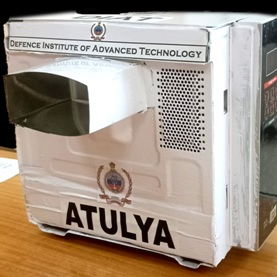
"ATULYA-Microwave Steriliser"

रक्षा अनुसंधान और विकास संगठन (Defence Research and Development Organisation- DRDO) के तहत पुणे स्थित डिफेंस इंस्टीट्यूट ऑफ एडवांस टेक्नोलॉजी (Defence Institute of Advanced Technology) ने कोरोनावायरस (COVID-19) को विघटित अथवा समाप्त करने के लिये ‘अतुल्य’ (ATULYA) नाम से एक ‘माइक्रोवेव-स्ट्रेलाइज़र’ (Microwave Steriliser) तैयार किया है।

  • रक्षा मंत्रालय द्वारा जारी अधिसूचना के अनुसार, यह वायरस 56 डिग्री से 60 डिग्री सेल्सियस तापमान में विभेदकारी ऊष्माष्यन (Differential Heating) द्वारा विघटित हो जाता है।
  • यह उत्पाद एक किफायती उपाय है जिसे पोर्टेबल (Portable) या फिक्स्ड इंस्टोलेशन (Fixed Installations) किसी भी रूप में संचालित (Operate) किया जा सकता है।
  • मानव सुरक्षा की दृष्टि से इस उपकरण का परीक्षण किया गया है और इसे सुरक्षित पाया गया है। 
  • मंत्रालय के अनुसार, भिन्न-भिन्न वस्तुओं के आकार और ढाँचे के अनुरूप विघटन का समय 30 सेकेंड से एक मिनट तक रहता है। इस उपकरण का वजन लगभग तीन किलोग्राम है और इसका उपयोग केवल गैर-मेटैलिक (Non-Metallic) वस्तुओं के लिये किया जा सकता है।

Atulya

DRDO और कोरोनावायरस

  • देश में कोरोनावायरस का प्रसार काफी तेज़ी से हो रहा है और संक्रमण का आँकड़ा दिन-प्रति-दिन बढ़ता जा रहा है। नवीनतम आँकड़ों के अनुसार, देश भर में कोरोनावायरस संक्रमण के कुल 52000 से अधिक मामले सामने आ चुके हैं और इस वायरस के प्रभाव से तकरीबन 1700 लोगों की मृत्यु हो चुकी है। 
  • हालाँकि इस वायरस का मुकाबला करने के लिये देश का प्रत्येक व्यक्ति और संस्थान अपनी-अपनी भूमिका अदा कर रहा है।
  • इसी क्रम में सशस्त्र बल और DRDO समेत रक्षा मंत्रालय के विभिन्न विंग्स भी देश में महामारी के प्रसार को रोकने का काफी प्रयास कर रहे हैं और अपनी-अपनी क्षमता के अनुसार, विभिन्न प्रकार के उत्पादों को डिज़ाइन और विकसित कर रहे हैं।
    • DRDO की स्थापना वर्ष 1958 में रक्षा विज्ञान संगठन (Defence Science Organisation-DSO) के साथ भारतीय सेना के तकनीकी विकास प्रतिष्ठान (Technical Development Establishment-TDEs) और तकनीकी विकास एवं उत्पादन निदेशालय (Directorate of Technical Development & Production- DTDP) के संयोजन के माध्यम से की गई थी।
    • DRDO रक्षा मंत्रालय के रक्षा अनुसंधान और विकास विभाग के तहत कार्य करता है।
  • DRDO ने महामारी से निपटने के लिये कई उत्पाद विकसित किये हैं, जिनमें वेंटिलेटर, पर्सनल प्रोटेक्टिव इक्विपमेंट (Personal Protective Equipment-PPE) किट, बड़े क्षेत्रों को सैनिटाइज़ करने हेतु उपाय और COVID-19 परीक्षण के नमूने एकत्रित करने हेतु कियोस्क आदि शामिल हैं।
  • हाल ही में DRDO ने अधिक संक्रमण वाले क्षेत्रों के त्वरित एवं रसायन मुक्त कीटाणुशोधन (Disinfection) के लिये एक अल्ट्रा वॉयलेट डिसइंफेक्सन टॉवर (Ultra Violet Disinfection Tower) भी विकसित किया है।
    • ‘यूवी ब्लास्टर’ (UV blaster) नाम का यह उपकरण एक अल्ट्रा वॉयलेट (UV) आधारित क्षेत्र सैनिटाइज़र (Sanitizer) है।

Indian Foreign Services (IFS)


भारतीय विदेश सेवा (आईएफएस) - 
भारतीय विदेश मंत्रालय के कार्यों के संचालन के लिये एक विशेष सेवा वर्ग का निर्माण किया गया है जिसे भारतीय विदेश सेवा  (Indian Foreign Service- IFS) कहते हैं। यह भारत के पेशेवर राजनयिकों का एक निकाय है। यह सेवा भारत सरकार की केंद्रीय सेवाओं का हिस्सा है। भारत के विदेश सचिव, भारतीय विदेश सेवा के प्रशासनिक प्रमुख होते हैं। यह सेवा अब संभ्रान्त परिवारों, राजा-रजवाड़ों, सैनिक अफसरों आदि तक ही सीमित रहकर सभी के लिये खुल गई है। सामान्य नागरिक भी अपनी योग्यता और शिक्षा के आधार पर इस सेवा का हिस्सा बन सकता है।

चयन प्रक्रिया:
·         भारतीय विदेश सेवा में चयन प्रत्येक वर्ष संघ लोक सेवा आयोग (यूपीएससी) द्वारा आयोजितसिविल सेवा परीक्षाके द्वारा होता है।
·         सिविल सेवा परीक्षा में अंतिम रूप से चयनित अभ्यर्थियों को उनके द्वारा प्राप्त कुल अंकों और उनके द्वारा दी गई सेवा वरीयता के अनुसार ही पदों का आवंटन किया जाता है।
·         इस सेवा के साथ अनेक चुनौतियाँ और उत्तरदायित्व जुड़े हुए हैं, इसलिये संघ लोक सेवा आयोग इस सेवा के लिये ऐसे अभ्यर्थियों  का ही चुनाव करता है जो इस सेवा के अनुकूल हों।
·         हाल के वर्षों में भारतीय विदेश सेवा में प्रति वर्ष लगभग 20 व्यक्तियों को नियुक्त किया जाता है। सेवा की वर्तमान कैडर संख्या लगभग 600 अधिकारियों की है,जिनमें लगभग 162 अधिकारी विदेशों में भारतीय मिशन एवं देश में विदेशी मामलों के मंत्रालय में विभिन्न पदों पर आसीन हैं।
शैक्षिक योग्यता:
·         उम्मीदवार को किसी मान्यता प्राप्त विश्वविद्यालय/ संस्थान से स्नातक (Graduate) होना अनिवार्य है|
प्रशिक्षण:
·         भारतीय विदेश सेवा के लिये चयनित नए सदस्यों को तीन वर्षीय (36 महीनों की अवधिमहत्त्वपूर्ण प्रशिक्षण कार्यक्रम से होकर गुज़रना पड़ता है। यह प्रशिक्षण निम्नलिखित चरणों में संपन्न होता है-
1.
आधारभूत प्रशिक्षण - 4 माह (राष्ट्रीय अकादमी, मसूरी में)
2.
व्यावसायिक प्रशिक्षण - 12 माह (ज़िला कार्यालय और अन्तर्राष्ट्रीय स्कूल, नई दिल्ली में)
3.
व्यावहारिक प्रशिक्षण - 6 माह (विदेश मन्त्रालय के अंतर्गत)
4.
परिवीक्षा प्रशिक्षण - 14 माह (विदेश स्थित उच्चायुक्त/दूतावास में)
·         सर्वप्रथम इन प्रशिक्षु अधिकारियों को ‘लाल बहादुर शास्त्री राष्ट्रीय प्रशासन अकादमी, मसूरी’ में 4 माह का आधारभूत प्रशिक्षण दिया जाता है, जहाँ कई अन्य विशिष्ट भारतीय सिविल सेवा संगठनों के सदस्यों को भी प्रशिक्षित किया जाता है।
·         नए सदस्य एक परिवीक्षा अवधि से गुज़रते हैं, इस दौरान इन्हें परिवीक्षार्थी (प्रोबेशनर) कहा जाता है।
·         लाल बहादुर शास्त्री राष्ट्रीय प्रशासनिक अकादमी का प्रशिक्षण पूरा करने के बाद परिवीक्षार्थी आगे के प्रशिक्षण के साथ-साथ विभिन्न सरकारी निकायों के साथ संलग्न होने और भारत एवं विदेश में भ्रमण के लिये नई दिल्ली स्थितविदेश सेवा संस्थानमें दाखिला लेते हैं। 
·         इन प्रशिक्षु अधिकारियों को ‘इंडियन स्कूल ऑफ इण्टरनेशनल स्टडीज़, नई दिल्ली’ में 4 माह का विदेश नीति तथा कार्य-प्रणाली, अन्तर्राष्ट्रीय संबंध तथा भाषा की जानकारी का प्रशिक्षण दिया जाता है।
·         इसके पश्चात् प्रशिक्षु अधिकारियों को 6 माह के लिये किसी ज़िला प्रशासन से संलग्न किया जाता है ताकि ये दायित्व के व्यावहारिक सम्पर्क में आने के योग्य हो जाएँ। साथ ही, इन्हें कुछ समय के लिये विदेश मन्त्रालय के सचिवालय में भी प्रशिक्षण प्रदान किया जाता हैं।
·         आईएफएस के लिये प्रशिक्षण कार्यक्रम में भाषाओं (हिन्दी तथा एक विदेशी भाषा) और ऐसे विषयों के अध्ययन पर बल दिया जाता है जिनका ज्ञान प्राप्त करना एक आईएफएस अधिकारी के लिये आवश्यक समझा जाता है। 
·         नए सदस्यों को कुछ दिनों के लिये सेना की यूनिट में तथाभारत दर्शनके लिये भी भेजा जाता है।
·         प्रशिक्षण कार्यक्रम के समापन पर अधिकारी को अनिवार्य रूप से एक विदेशी भाषा (Context Free Language - CFL) सीखने का जिम्मा दिया जाता है। 
·         एक संक्षिप्त अवधि तक विदेश मंत्रालय के साथ संलग्न रहने के बाद अधिकारी को विदेश में एक भारतीय राजनयिक मिशन पर नियुक्त किया जाता है जहाँ की स्थानीय भाषासीएफएलहो। वहाँ  अधिकारी भाषा का प्रशिक्षण प्राप्त करते हैं और फिर इनसे सीएफएल में दक्षता प्राप्त करने और एक परीक्षा उत्तीर्ण करने की अपेक्षा की जाती है, उसके बाद ही इन्हें सेवा में बने रहने की अनुमति दी जाती है।
नियुक्ति एवं पदोन्नति: 
o    आईएफएस अधिकरियों की नियुक्ति सामान्यत: दूतावास, वाणिज्य दूतावास एवं विदेश मंत्रालय में की जाती है।
o    ये विदेशों में अपनी सेवा तृतीय सचिव के तौर पर आरंभ करते हैं और सेवा में स्थायी होते ही द्वितीय सचिव के पद पर प्रोन्नत कर दिये जाते हैं। 
o    आईएफएस अधिकारी की सर्वश्रेष्ठ पदस्थापना राजदूत या विदेश सचिव के रूप में होती है|  इनका पदक्रम इस प्रकार है-
o    दूतावास में:
तृतीय सचिव (प्रवेश स्तर)
द्वितीय सचिव (सेवा में पुष्टि के बाद पदोन्नति)
प्रथम सचिव
सलाहकार
मिशन के उपाध्यक्ष/ उप उच्चायुक्त/ उप स्थायी प्रतिनिधि
राजदूत/उच्चायुक्त/स्थायी प्रतिनिधि
o    वाणिज्य दूतावास में: 
उप वाणिज्य दूत(Vice Consul)
वाणिज्य दूत(Consul)
महावाणिज्य दूत(Consul-General)
o    विदेश मंत्रालय में:
अवर सचिव(Upper Secretary)
उप सचिव(Deputy Secretary)
निदेशक(Director)
संयुक्त सचिव(Joint Secretary)
अतिरिक्त सचिव(Additional Secretary)
सचिव(Secretary)
कार्य
·         वृत्तिक (Professional) राजनयिक के तौर पर आईएफएस अधिकारी से यह आशा की जाती है कि वह विभिन्न मुद्दों पर देश और विदेश दोनों में भारत के हितों का ध्यान रखेगा और इसे आगे बढ़ाएगा। इनमें द्विपक्षीय राजनीतिक और आर्थिक सहयोग, व्यापार और निवेश संवर्द्धन, सांस्कृतिक आदान-प्रदान, प्रेस और मीडिया संपर्क तथा सभी बहुपक्षीय मुद्दे शामिल हैं। 
·         आईएफएस अधिकारी मुख्यत: देश के बाह्य मामलों जैसे- कूटनीति, व्यापार, सांस्कृतिक संबंधों, प्रवास संबंधित मामलों आदि से संबंधित कार्यों को संपादित करते हैं|
·         ये भारत की विदेश नीति के निर्माण तथा क्रियान्वयन में संलग्न रहते हैं|
·         ये अपने दूतावासों, उच्चायोगों और संयुक्त राष्ट्र जैसे बहुपक्षीय संगठनों के स्थायी मिशनों में भारत का प्रतिनिधित्व करते हैं|
·         नियुक्त किये जाने वाले देश में भारत के राष्ट्रीय हितों की सुरक्षा सुनिश्चित करना इनका मुख्य उद्देश्य होता है।
·         अनिवासी भारतीयों और भारतीय मूल के व्यक्तियों सहित मेज़बान राष्ट्र और उसकी जनता के साथ मैत्रीपूर्ण संबंध बनाए रखने में इनकी मुख्य भूमिका होती है।
·         ये विदेश में उन घटनाक्रमों की सही-सही जानकारी देते हैं, जो भारत के नीति-निर्माण को प्रभावित कर सकती हैं।
·         मेज़बान राष्ट्र के प्राधिकारियों के साथ विभिन्न मुद्दों पर समझौता-वार्ता करने की ज़िम्मेदारी भी इन्हीं की होती है।
·         विदेश मंत्रालय, भारत के विदेश संबंधों से जुड़े सभी पहलुओं के लिये उत्तरदायी है। क्षेत्रीय प्रभाग, द्विपक्षीय राजनीतिक और आर्थिक कार्य देखते हैं, जबकि क्रियात्मक प्रभाग,  नीति-नियोजन, बहुपक्षीय संगठनों, क्षेत्रीय दलों, विधिक मामलों, निःशस्त्रीकरण, नवाचार, भारतीय डायस्पोरा, प्रेस और प्रचार, प्रशासन तथा अन्य कार्यों को देखते हैं।